Notes on The Richest Man in Babylon

Hey everyone — Akmal here again. Some time ago I wrote about compound interest and how realistic it is for the poor to become rich. One is about the math of time; the other about social structures that often get in the way. Between them sits a classic that keeps showing up on personal-finance reading lists: The Richest Man in Babylon by George S. Clason.
This is not modern economic theory. Written in 1926, it is framed as short stories set in ancient Babylon: camel traders, brick makers, and a gold master named Arkad. The narrative feels like a fable, but the core is concrete: wealth is not merely the gift of luck; it is a discipline that can be learned.
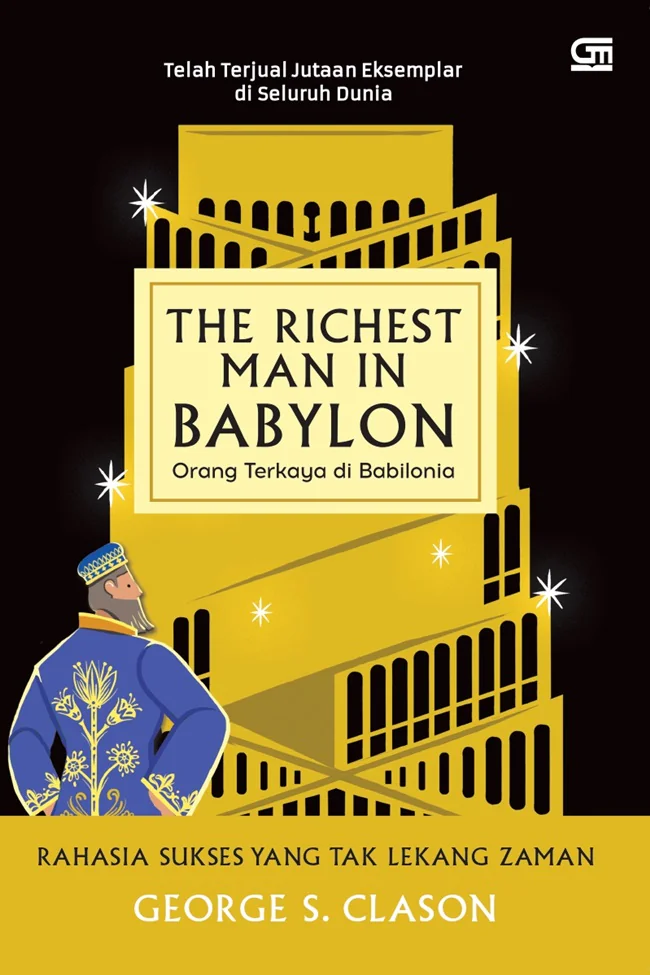
The richest man in Babylon
Why Babylon?
Clason chose Babylon not out of historical nostalgia, but because in his era the city was known as a center of trade and wealth in Mesopotamia. His readers — bank clerks and entrepreneurs in 1920s America — needed plain language about money, not dense formulas.
The structure is parable-based:
- Each chapter is a short story with different characters.
- Lessons are delivered through dialogue, not bullet commandments.
- The reader is invited to “hear” advice from those who have already proven wealthy.
Similar to how Harari in Sapiens uses stories to explain imagined systems — only here the stories are about wallets, not flags.
Arkad: from poor scribe to richest man
The central story begins when two friends, Bansir (chariot builder) and Kobbi (musician), complain that they have worked hard all their lives yet remain poor. They seek out Arkad — once their equal, now the richest man in Babylon.
Arkad admits he was the same: paycheck gone, no savings. Change came when he asked Algamish, a wealthy merchant, for counsel. The first piece of advice that changed his life:
“Start thy purse to fattening. Save one part of ten of all you earn.”
Algamish did not say “earn more first.” He said: pay yourself first — at least 10% of income — before merchants, rent, or desires.
Arkad was skeptical. How could one live on 90% if 100% was never enough? Algamish answered: habit. People adjust spending to what is available. If 10% vanishes into savings from the start, the remaining 90% is forced to become efficient.
That is the foundation of the entire book: wealth begins with consistent positive cash flow, not a single large paycheck.
Seven cures for a lean purse
Arkad then teaches seven principles to the citizens of Babylon. Clason calls them Seven Cures for a Lean Purse. A modern unpacking:
Cure 1: fatten thy purse (save 1/10)
Save at least 10% of every inflow — salary, bonus, gift, anything. Not “whatever is left,” but the first priority after money arrives.
Simple example: salary of $800 → $80 straight to a separate investment/savings account. $720 left to live on.
Cure 2: control thy expenditures
The remaining 90% must cover measured needs and desires. Arkad distinguishes:
- Needs: food, shelter, health, transport.
- Wants: things that “can wait” but often disguise themselves as needs.
The book does not preach asceticism. It preaches conscious budgeting: know where every coin goes, and do not let lifestyle rise as fast as income.
Cure 3: make thy gold multiply
Savings under the mattress are not enough. Money must work — through investment, side business, or income-producing assets. The ancient Babylonian version of compound interest: gold begetting gold.
Money under the mattress is a sleeping servant. Invested money is a servant that works while the master sleeps.
Cure 4: guard thy treasures from loss
Arkad warns: do not be greedy for high returns without understanding. Gold disappears quickly when entrusted to:
- “Guaranteed profit” schemes that are unclear.
- Friends who borrow with no repayment plan.
- Speculation you do not understand.
His advice: seek those who have already proven they manage money well (Mathon the gold lender is the example in another chapter). Advice is cheaper than loss.
Cure 5: make of thy dwelling a profitable investment
Own a home (or the equivalent: housing assets that do not “evaporate” like pure rent). In a modern context this is debatable — not everyone must buy in an expensive city — but the essence is: allocate part of wealth to long-term stabilizing assets, not only consumption.
Cure 6: insure a future income
Plan for old age, illness, or when the body can no longer work as hard. This is the seed of pension funds, insurance, and emergency funds — often ignored by Gen Z because it feels “far away.”
Cure 7: increase thy ability to earn
Arkad closes with a point many savers forget: income is the engine. The more skilled you become — learning, practice, reputation — the more meaningful the same 10% becomes.
The more wisdom we possess, the more we may earn.
This connects directly to modern work: skill stacking, certifications, portfolios. Saving 10% of $500 and 10% of $2,000 are very different stories.
The five laws of gold
In a separate chapter, Clason summarizes the Five Laws of Gold — how money “behaves” when treated well or poorly:
| Law | Essence |
|---|---|
| I | Gold comes gladly to those who save ≥1/10 of earnings. |
| II | Gold works diligently for the owner who invests it wisely. |
| III | Gold clings to the cautious owner who seeks expert counsel. |
| IV | Gold slips away from those who invest in ventures they do not understand. |
| V | Gold flees those who force impossible returns or follow deception. |
Laws IV and V are the antidote to our era: unresearched crypto, MLMs, “signal trading” groups, and financial influencers without a track record. Ancient Babylon had no trading apps, but the humans behind them are identical.
Other parables worth remembering
Mathon the gold lender
Mathon teaches the art of lending: lend only when there is collateral or a clear ability to repay. Compassion without financial principle destroys both parties — borrower and lender.
The lesson for us: consumer debt to friends/family without a contract often ends in broken relationships, not shared wealth.
The walls of Babylon
The city’s defense is a metaphor for an emergency fund. Babylon survived because its walls were thick; individuals survive because savings are thick enough to withstand life’s “sieges” — job loss, illness, home repair.
The camel trader and the goddess of good luck
Clason separates luck from laziness. Luck favors those who are prepared — working, learning, and seizing opportunity when it appears. Not those who wait for the lottery.
This is not a denial of structural barriers (which I discuss in the social mobility note), but a reminder: within existing limits, discipline still moves.
The luckiest man in Babylon
The closing story of a slave who becomes free and wealthy through hard work, saving, and using opportunity — not inheritance. Clason wants readers to believe origins can be overcome, though he does not explicitly address systemic inequality.
Relevance (and limits) today
Pay yourself first, living below your means, and the idea of gold begetting gold still land — especially in an era of lifestyle inflation and “get rich quick” content. Automating 10% on payday, budgeting consciously, and understanding investments before jumping in: that is the useful core.
But read with open eyes. Written for the 1920s American middle class, the book does not address structural inequality, discrimination, or inherited poverty (see the social mobility note); the cost of living in major cities that can swallow more than 10% savings; or the assumption that “buying a home always wins,” which is not universal in every property market.
Best stance: accept behavioral principles (save, invest, learn), but do not make this book your only social lens.
If you want to try one thing
The single easiest takeaway from Arkad:
Income arrives
    → 10% straight to savings/investment (automated)
    → 70% daily life (needs + controlled wants)
    → 20% debt / emergency fund / special goals (optional, adjust to your situation)
Then, every six months: raise earning ability (skills, salary negotiation, side income) and review investments — is your gold actually working, or vanishing through speculation?
Closing
The Richest Man in Babylon does not promise you will become a millionaire. It promises something humbler but more honest: if you save consistently, control yourself, invest wisely, and keep learning — your purse will fatten little by little.
In a world full of instant-gratification content, parables on Mesopotamian sand feel refreshingly boring. Perhaps that is their strength.
As I wrote in the compound interest note: time is an asset. Clason’s book adds a condition before time can work — you must give it something to grow. Ten percent, every month, for decades.
“Wealth that comes quickly often departs quickly. Wealth built slowly is a lifelong companion.” — in the spirit of Arkad’s counsel
If your purse stays lean despite hard work — like Bansir and Kobbi — maybe it is time to sit down and ask: have I paid myself first yet?
Comments & Discussion