Compound Interest: Why Time Often Beats a Huge Starting Balance

Hey everyone — Akmal here again. This one is about something people mention a lot but rarely actually calculate: compound interest.
The idea is simple: interest you earn also earns interest in later periods. Principal works, then its “offspring” work too. Not magic, not a cheat code — just math that needs time. If you’re young, the biggest edge is usually not a huge salary, but a longer time horizon.
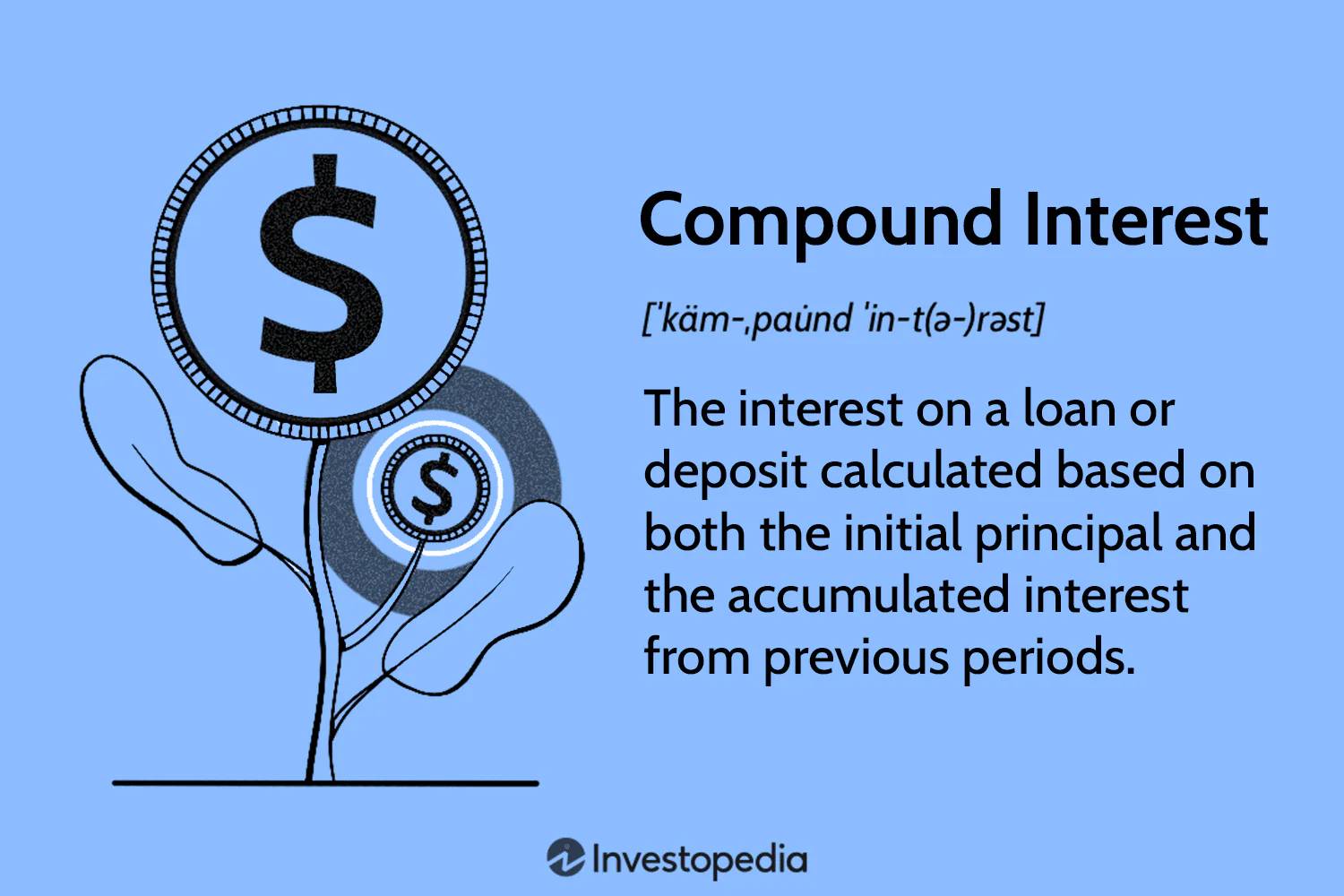
Compound interest
Versus simple interest
Compound interest is calculated on principal plus interest already earned.
Compare with simple interest:
- Simple: Rp1,000,000 at 10%/year → Rp100,000 every year, fixed.
- Compound: year 1 earns Rp100,000; year 2 applies 10% to Rp1,100,000 → Rp110,000; year 3 on Rp1,210,000, and so on.
The formula
If you like numbers, future value with compound interest:
$$A = P \left(1 + \frac{r}{n}\right)^{nt}$$
Where:
- $A$ = Final value (accumulated money)
- $P$ = Initial principal
- $r$ = Annual interest rate
- $n$ = Frequency of interest compounding per year
- $t$ = Time period in years
Simulation (illustrative)
Hypothetical: someone aged 24 sets money aside consistently. The figures below are not a promised return — only an illustration if the assumptions hold constant.
- Monthly investment: Rp5,000,000
- Assumed return: 9% per year (rough index/mutual-fund-style assumption — real markets swing)
- Duration: 20 years
If those assumptions held the whole way:
| Year | Total Principal Invested | Investment Value (Final Result) |
|---|---|---|
| 1 | Rp60,000,000 | Rp62,500,000 |
| 5 | Rp300,000,000 | Rp376,000,000 |
| 10 | Rp600,000,000 | Rp967,000,000 |
| 20 | Rp1,200,000,000 | Rp3,339,000,000 |
Here’s the comparison in a visual chart:
Investment Growth vs Principal
Comparing accumulated principal with final investment result (in Rupiah).
*Bar length is calculated proportionally to the final value of Rp3.339 Billion.
Note: By year 20 (under the assumptions above), cumulative deposits ~1.2 billion, estimated value ~3.3 billion. Most of the gap is interest earning interest — if average returns land near the assumption. Real markets rise and fall; this is not a personal forecast.
You can play with your own numbers using the compound interest calculator on this site: here.
Why it matters when you’re still young
Past time can’t be bought. Starting in your 20s usually means you don’t need as much principal as someone who starts in their 40s to chase the same target (assuming similar returns). Delaying a few years cuts potential — not because you’re “lazy,” but because the compounding horizon gets shorter.
Reality is also rough: lifestyle inflation and housing costs in many cities rise faster than typical raises. Cash savings alone often lose. Add job uncertainty in an automation era. So early investing, to me, reads better as building a cushion than as a fast track to getting rich.

Example data comparison of cost of living vs minimum wage in several countries in 2013
Closing
Compound interest isn’t about getting rich overnight. It’s about giving set-aside money time — with risks you understand. If you haven’t started, what’s usually in the way isn’t “not knowing the formula,” but waiting until you “have a big balance.” Small, consistent amounts over a long horizon usually beat waiting for perfect conditions.
Investment apps are easier to use now. What’s still hard: the discipline to set money aside, and not panicking when markets drop.

Comments & Discussion