A Biography of Our Species: Why Sapiens Are the Greatest Storytellers in the Universe

It has been quite some time since I first closed the final pages of Sapiens by Yuval Noah Harari. However, one specific concept from Harari continues to haunt my mind every time I see a skyscraper, use a banking app, or witness the political frenzy on social media.
This drastic shift in our history didn’t happen because our brain volume suddenly doubled; it happened because we discovered “Fiction.” We are the only creatures capable of discussing things that have never been seen, touched, or smelled by our physical senses.
About 70,000 years ago, our ancestors were insignificant animals. On the African savannah, Homo sapiens were not apex predators; we were in the middle of the food chain, busy gathering nuts and living in fear of lions. Yet today, we stand as the masters of the planet, holding the keys to both nuclear destruction and the creation of artificial intelligence.
This is the story of how that imagined order evolved, layer by layer.

Sapiens Book
1. Breaking Biological Limits: Gossip and Dunbar’s Number
Biologically, our cooperation should be limited. A chimpanzee can only cooperate if it knows another chimpanzee personally. Without physical contact or “mutual grooming,” trust cannot be built. This limits their groups to a maximum of 150 individuals (Dunbar’s Number).
Sapiens made a giant leap through Gossip. We don’t just talk about where the banana trees are; we talk about who can be trusted and who is a liar. But gossip alone isn’t enough to build empires. We need “Myths.” By creating stories about Gods, Totems, or Fatherlands, Sapiens can make 100,000 strangers cooperate to build pyramids—something a million chimpanzees could never do, because they lack a shared “scripture” or “constitution.”
2. Invisible Architecture: Nations and Human Rights
Harari often emphasizes a bitter paradox: Nature does not know human rights. Biologically, there is no difference between the rights of a nobleman and a commoner, or between a citizen of America and Indonesia. If you dissect a human body, you will find a heart, lungs, and neurons—but you will not find the “Right to Liberty” inside our DNA helix.
The nation-state is the most voracious imagined order. It is nothing more than imaginary lines on a map that we defend with our lives. We are willing to die for a “flag”—a piece of cloth with a specific color pattern—simply because we believe in the narrative of sovereignty that accompanies it. This is the power of Sapiens: we create imaginary prisons, then voluntarily live inside them.
3. Legal “Ghosts”: The Magic of Modern Corporations
One of the most ingenious fictional achievements is the Limited Liability Company (LLC). Take Peugeot as an example. The company is not its cars, not its factories, and not its employees. If a disaster were to wipe out all its physical assets tomorrow, Peugeot would still exist as a legal entity on paper.
This is a modern form of sorcery. We create “artificial persons” (legal entities) that can sue, borrow money, and own assets. Through this fiction, we can conduct global trade without personal risk of death. We no longer trade between humans, but between fictions we call corporations.
4. Inter-subjective Belief: Money as a Universal Religion
Religions often divide, but Money is the only belief system that unites everyone. You might not believe in someone else’s god, but you definitely believe in their money.
Money has no intrinsic value. A banknote cannot be eaten, and the numbers on a phone screen cannot keep you warm. Its value depends entirely on inter-subjective belief. As long as billions of people agree that the paper is valuable, it will remain valuable. Money is the most tolerant fiction ever created; it doesn’t care about your race, religion, or sexual orientation, as long as you share the same “belief” in its exchange value.
5. A Deadly Alliance: Science, Capitalism, and Empire
If ancient religions claimed to have all the answers, the Scientific Revolution began with one revolutionary admission: “We don’t know.” This admission of ignorance fueled a thirst for exploration.
However, science does not move in a vacuum. It is driven by Capitalism. We began to invest in the future because we believed in the narrative of “Growth.” We borrow money today (which doesn’t actually exist yet) because we believe the economy will be larger tomorrow. This is a belief in “something that hasn’t happened”—a fiction of the future that allows us to build satellites, medicine, and nuclear weapons.
Conclusion: Prison or Wings?
The uniqueness of Sapiens is that we live in a Dual Reality. On one side is the objective reality (rain, lions, disease), and on the other is the inter-subjective reality (money, nations, human rights).
Remarkably, this imagined order is flexible. While bees have rigid social systems written in their DNA, humans can change their social systems in an instant through revolution—simply by changing the “Story” we believe in. We can turn a monarchy into a democracy, or capitalism into socialism, just by replacing the collective narrative.
However, Harari closes with a chilling reminder: We are now “Gods” with the power to create and destroy, but we are gods who do not know what we want. We are still trapped in fictions that sometimes torment us (such as chasing digits in a bank account while ignoring biological happiness).
Tragically, as time goes on, this imaginary reality becomes much stronger. Today, if a bank (fiction) collapses, millions of people can suffer from hunger, even though the trees in the forest (objective) are still heavy with fruit.
Reading Sapiens isn’t just about learning history; it’s about realizing that the world we live in today is a collection of stories we have all agreed upon.
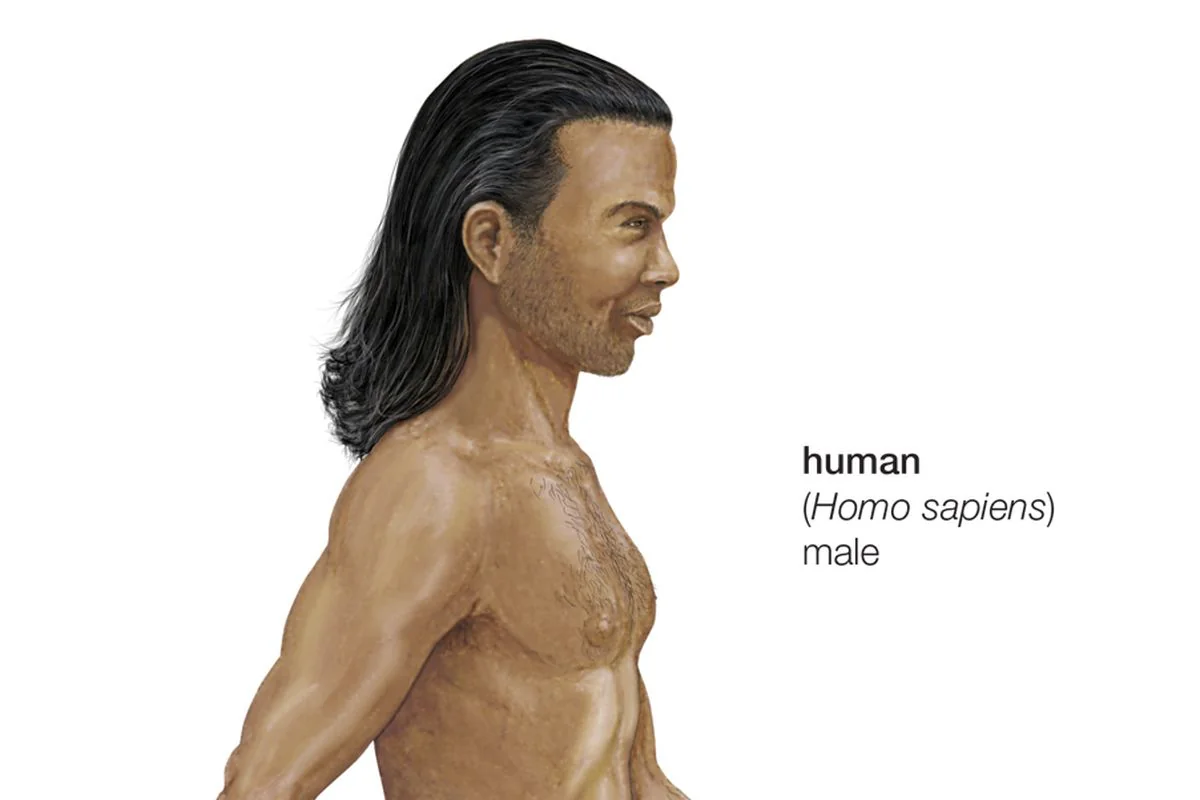
Homo Sapiens
Comments & Discussion