Hanzi: How One Writing System Once Became East Asia’s “Universal Script”

Have you ever wondered why East Asia has several “versions” of characters that look similar but aren’t quite the same—Hanzi in China, Kanji in Japan, Hanja in Korea, and once even in Vietnam? In short: the resemblance isn’t coincidence. They share a single origin, then spread and evolved so that for centuries Chinese characters effectively functioned as a universal writing system across the region.
This article looks at how Hanzi grew from divination script in ancient China into a shared script for elites and literature in China, Korea, Japan, and Vietnam, and how each region adapted it into the Traditional Hanzi, Simplified, Hanja, and Kanji we know today.
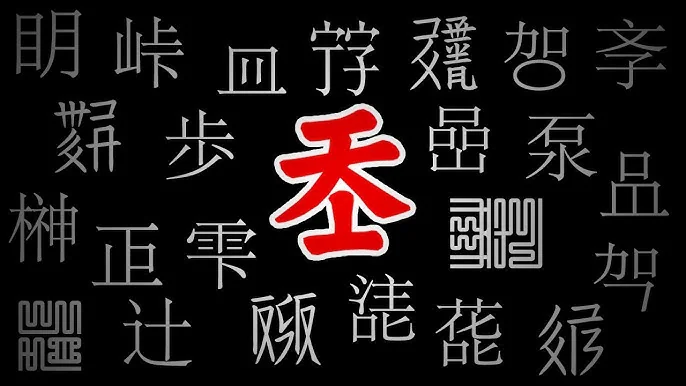
Hanzi characters
One Tree, Many Branches: Why Hanzi Felt “Universal” in East Asia
Chinese characters (Hanzi) are among the oldest writing systems still in use. They developed over more than three thousand years and shaped nearly all literate culture in East Asia. What’s striking: China wasn’t the only user. Korea, Japan, and Vietnam once—or still—used the same system or its offshoots. That’s why we can say Hanzi once acted as a “universal script” in the region: one set of symbols that could be understood (at least by the educated) across many countries despite different spoken languages.
The differences we see today—Traditional Hanzi, Simplified Hanzi, Hanja, and Kanji—didn’t appear out of nowhere. They’re the result of long histories of politics, education reform, and language change in each place. Below we trace their origins, a short timeline of development, and how each variant emerged and why Hanzi once played the role of a written “lingua franca” in East Asia.
Origins: From Bones and Pictures to a Standard Script
Hanzi began as an ancient writing system in China. At first it was pictographic—characters depicted real objects. Over time it became logographic: each character stood for a word or morpheme. That’s what allowed one set of characters to be “carried” by many languages with different readings (like Kanji in Japanese with onyomi and kunyomi).
Short Timeline of Chinese Character Development
Around 1200 BCE — Oracle Bone Script (甲骨文)
In the Shang dynasty, characters were written on animal bones and turtle shells for divination. The shapes were still highly pictorial (e.g. sun as a circle with a dot, mountain as three peaks). This is the earliest known form of Hanzi.

Oracle Bone Script
1046–256 BCE — Bronze Script (金文)
In the Zhou period, characters were cast or engraved on bronze objects (ritual bells, vessels). Forms became more stable though regional variation remained large.

Bronze Script
221 BCE — Seal Script (篆书)
When China was unified under the Qin dynasty, Emperor Qin Shi Huang standardised writing into the official system called Seal Script. That was a crucial step: one script for one imperial administration. From here the idea of “one system for many regions” took root.

Modern Hanzi (left) vs Seal Script
Around 200 BCE–200 CE — Clerical Script (隶书)
Under the Han dynasty, writing evolved into Clerical Script, more practical for everyday use by clerks and officials. Many modern character shapes have their roots in this period.

Clerical Script
Around 200 CE–present — Regular Script (楷书)
From this emerged Regular Script, which became the basis of modern character forms across East Asia. Hanzi, Hanja, and Kanji all inherit their shapes from this stage.
Through standardisation and spread via administration and literature, Chinese characters became not only China’s official script but also a cultural commodity that spread to neighbouring regions through trade, diplomacy, and religion.

Hanzi evolution across periods
Hanzi as East Asia’s “Universal Script”: Spread to Korea, Japan, and Vietnam
For Hanzi to work as “universal” in East Asia, two things had to happen: spread from China to other regions, and adoption by local elites as the script for administration, law, and literature.
-
Korea
Chinese characters reached the Korean Peninsula around the first century CE through cultural and political contact with China. Hanja was then used for official documents, classical literature, and scholarly texts. Because Korean grammar is very different from Chinese, Koreans used characters mainly for Sino-Korean vocabulary and classical texts—until Hangul was created (15th century) and gradually took over as the everyday script. -
Japan
Chinese characters are thought to have reached Japan around the 5th century, brought by scholars and monks from China and Korea. Japan too used characters for official and literary texts, then developed Hiragana and Katakana to write Japanese grammar and native words. The result is the mixed Kanji–Kana system still used today, with a single character often having multiple readings (onyomi from Chinese, kunyomi from Japanese). -
Vietnam
Vietnam long lay within China’s cultural orbit and used Chinese characters for official and literary writing (Chữ Hán). Later Chữ Nôm emerged—characters adapted or invented to write Vietnamese. Only in the 20th century did the Latin alphabet (Chữ Quốc ngữ) replace both.
So “universal” here doesn’t mean everyone on the street could read it, but that educated elites in China, Korea, Japan, and Vietnam could share one body of writing (Chinese classics) and understand each other’s documents, poetry, and sacred texts written in the same characters—even though each read them in their own language’s sounds. That’s Hanzi’s role as East Asia’s “universal script.”
Traditional Hanzi: The Classical Form That Endured
Traditional Hanzi keeps the classical structure used for centuries: relatively many strokes and closer to historical forms. Today it’s used mainly in:
- Taiwan
- Hong Kong
- Macau
- Parts of the Chinese diaspora
Examples:
| Character | Meaning |
|---|---|
| 國 | country |
| 龍 | dragon |
| 學 | to study |
| 體 | body |
Many argue that the traditional form better preserves etymological links between characters and richer visual context—and this is the form that was once “universally” studied by elites in Korea and Japan (as classical Hanja/Kanji).
Simplified Hanzi: 20th-Century Reform in Mainland China
In the mid-20th century, the Chinese government carried out a script reform to raise literacy. Simplification was officially launched in 1956 and updated in 1964. The goals: fewer strokes, easier learning to write, and higher national literacy.
Comparison:
| Traditional | Simplified | Meaning |
|---|---|---|
| 國 | 国 | country |
| 龍 | 龙 | dragon |
| 學 | 学 | to study |
| 體 | 体 | body |
Simplified Chinese is now used in mainland China, Singapore, and parts of Malaysia. Although simplified, most characters keep their basic structure so that fluent readers can usually recognise both systems.
Worth noting: this simplification came after the era when Hanzi (in traditional/classical form) functioned as a shared script across East Asia. So Simplified is a later development in mainland China, not a replacement for “universal Hanzi” across the whole region.
Hanja: Chinese Characters in Korean
Hanja is the name for Chinese characters used in a Korean context. They entered Korea around the first century CE and long served as the main script for official documents, classical literature, and academic texts. Because Korean grammar is very different from Chinese, Koreans developed ways to use Hanja (e.g. for Sino-Korean words) while still speaking Korean.
In the 15th century, King Sejong of the Joseon dynasty created Hangul. The aim was to let ordinary people learn to read and write easily. As a result, Hangul became the primary script and Hanja use gradually declined. Today South Korea still teaches Hanja in education to understand Sino-Korean vocabulary; North Korea has largely abandoned it.
Hanja and Hangul equivalents:
| Hanja | Hangul | Meaning |
|---|---|---|
| 學 | 학 (hak) | to study |
| 國 | 국 (guk) | country |
| 大 | 대 (dae) | big |
Hanja is a branch of “universal Hanzi” that Korean elites once used to communicate in writing with the Chinese literary world and with educated readers in Japan.
Kanji: Chinese Characters in Japanese
Kanji is the adaptation of Chinese characters into the Japanese writing system. They reached Japan around the 5th century via scholars and monks from China and Korea. Because Japanese grammar is very different from Chinese, Japan developed Hiragana and Katakana. All three are used together: Kanji for content words, Hiragana for grammatical endings, Katakana for foreign loanwords.
Onyomi and Kunyomi: One Character, Many Readings
A defining feature of Kanji is that one character can have several readings, since Chinese characters were adopted into Japanese in several waves and paired with existing Japanese words.
-
Onyomi (音読み)
Readings derived from Chinese pronunciation (with variation by period of borrowing). Often used in compound words (jukugo), technical terms, and formal vocabulary.
Examples: 学 → gaku, 国 → koku, 電 → den; 学校 (gakkō) = school, 電話 (denwa) = telephone. -
Kunyomi (訓読み)
Native Japanese readings assigned to the character. Often used when the character stands alone or in native Japanese words.
Examples: 山 → yama (mountain), 水 → mizu (water), 食 → ta(beru) (to eat).
The existence of onyomi and kunyomi shows how one “universal” set of characters (Hanzi) was adapted to a very different language: meaning and form could stay shared while sound followed the local language.
Kanji Reform in Japan: Shinjitai
After World War II, the Japanese government carried out a script reform (Shinjitai). Some characters were simplified (e.g. 國→国, 體→体, 學→学), but not to the same extent as in China. So modern Japanese Kanji still closely resembles Traditional Hanzi, while mainland China uses Simplified.
Why Are These Systems Different? Language, Politics, and Modernisation
The differences between Traditional Hanzi, Simplified, Hanja, and Kanji can be summed up by a few factors:
-
Language differences
Chinese, Japanese, and Korean have very different grammars. That forced adaptation: Hangul and Kana arose to write local grammar, while characters were used for words often of Sino origin. -
Political reform
Script reform in 20th-century China produced Simplified Chinese; in Japan, post-war policy produced Shinjitai. -
Cultural evolution
Each country adapted the script to its own cultural and educational needs—e.g. Korea prioritising Hangul, Japan keeping the Kanji–Kana mix. -
Education modernisation
Some countries simplified or shifted the role of the script to raise literacy (China with Simplified; Korea with Hangul as the main script).
Conclusion: From One Root to Many Faces
Traditional Hanzi, Simplified Hanzi, Hanja, and Kanji all stem from the same writing system. They evolved through long histories so that their form and role differ in China, Korea, Japan, and (formerly) Vietnam.
- Traditional Hanzi preserves the classical form and is still used in Taiwan, Hong Kong, Macau, and the diaspora.
- Simplified Hanzi is the product of modern reform in mainland China (and is also used in Singapore and parts of Malaysia).
- Hanja is the adaptation of Chinese characters in a Korean context; its role today is mainly historical and educational.
- Kanji remains central to the Japanese writing system, with unique readings (onyomi and kunyomi) and limited simplification (Shinjitai).
The key takeaway: Hanzi once functioned as a “universal script” in East Asia—not in the sense that everyone could read it, but in the sense that educated elites in many countries could share one body of writing (Chinese classics) and understand each other’s written texts despite different spoken languages. Understanding the history and differences of these four systems doesn’t only help with learning East Asian languages; it also opens a window on how one writing system can spread, adapt, and stay relevant across cultures.
Comments & Discussion